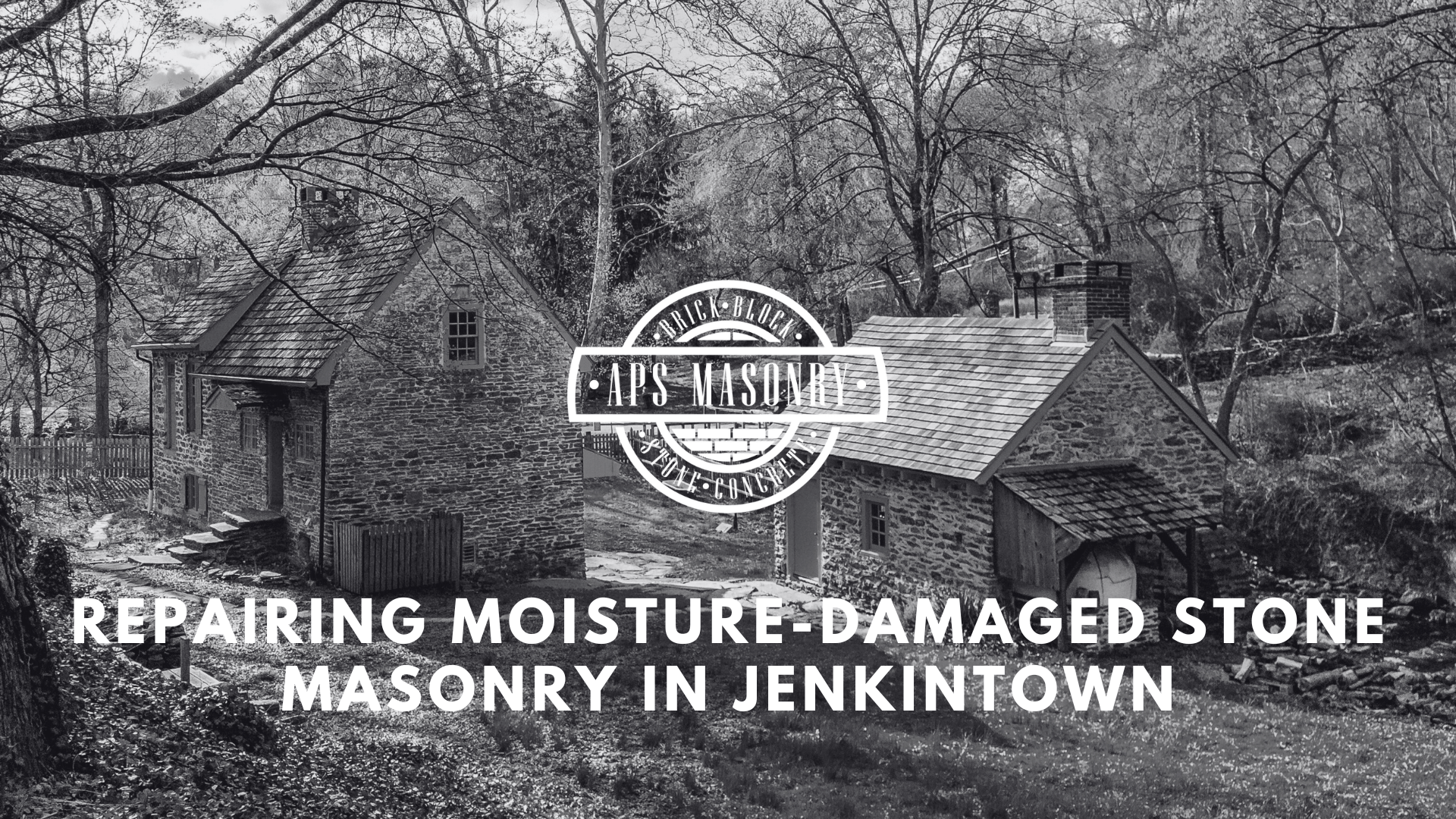
Repairing moisture-damaged stone masonry in Jenkintown takes more than patchwork. It takes knowledge, precision, and professional masonry services built for residential structures.
Repairing Moisture-Damaged Stone Masonry in Jenkintown: The Six Repair Steps, How Long Each One Takes, and What Happens When Repairs Wait
Masonry Services That Fix the Problem, Not Just the Surface
APS Masonry Contracting delivers expert stone pointing, brick pointing, and stucco repair for homeowners protecting their property from water damage, cracks, and structural issues. We specialize in preserving the integrity of brick walls, foundations, and retaining walls throughout Jenkintown and the surrounding Philadelphia region.
Moisture intrusion weakens mortar, stains interior walls, and reduces the value of your house. Left untreated, these problems spread from one block to the next. Our masonry services include full inspections, repointing, and stone tuck options tailored to the exact condition of your project. Whether you're seeing surface-level wear or deep foundation movement, our team is ready. Call for a free estimate and protect your investment before the damage multiplies.
What Needs to Happen When Moisture Damages Stone in Jenkintown
Step 1: Identify the moisture path
Check where water is entering the wall. In Jenkintown, older residential properties often have poor waterproofing, sloped gardens, or disconnected drainage lines. These allow runoff to saturate the foundation, particularly around retaining walls and brick walls.
Inspect for cracks and loose mortar. If joints crumble under light pressure or show gaps, moisture has already compromised the masonry. Look along chimney bases, stone garages, and rear extensions; these areas are common weak points in Jenkintown homes.
Step 2: Remove failed material
Damaged mortar must be removed completely. Use hand tools, not grinders, to avoid damaging stone edges. The goal is to clear each joint to a depth twice its width, usually 1.5 to 2 inches. On local schist, joint widths vary across the wall. Tools like pointing chisels and brushes keep the process clean and precise.
Do not wet the wall. Dry removal preserves the interior wall integrity and prevents spreading water deeper into the structure.
Step 3: Allow for full drying
The wall must be left open to dry before any replacement. This includes stone facing, block foundations, and areas under stucco repair. Moisture trapped behind the wall will cause new mortar to fail, even after full repointing.
In some projects, temporary venting or interior dehumidifiers are used. Drying time varies based on temperature, wall thickness, and whether the damage is interior or exterior.
Step 4: Rebuild with the correct mortar
Use lime mortar only. It allows the masonry to breathe and moves with the wall. Portland-based mortar is too rigid for most stone repair projects in this region and leads to further structural issues.
Match the finish. Texture, tooling, and sand color all affect the final look. Poor matches lower the visual value of the property and reduce resale appeal.
Every joint is packed in two stages. Deep fills are pressed tight at the back, then finished flush with the original profile.
Step 5: Replace any failed stones
Stones that have cracked, shifted, or become loose need full replacement. This is especially true on older brickwork at transitions between brick and stone, and around foundations where load-bearing pressure is high.
Cut to size, re-bed into mortar, and align to match the original pattern. Stone tuck techniques are used on exposed faces to create uniform runoff.
Step 6: Check the surrounding features
Check for damaged flashing on chimneys, blocked gutters, or stucco breaks above window lines. These allow water to reach behind the wall and undo completed work.
Make sure all drainage runs five feet from the base of the building. This protects both new and existing masonry from ongoing saturation.
How Long Each Step Takes and What It Requires
Step 1: Investigation and Setup
Time: 2 to 4 hours
Effort: Medium
Materials and Tools Needed:
- Flashlight
- Chalk or pencil for marking cracks
- Basic moisture meter (optional)
- Notepad or site table to log areas of concern
Most homeowners underestimate how long this takes. You're not just checking one section, you're mapping drainage lines, noting discoloration on interior walls, checking the garage slab, inspecting chimney caps, and documenting every failed joint.
There is no standard layout in Jenkintown stonework. Some buildings use mixed stone and brick construction, which requires careful distinction during inspection. Each section must be reviewed in detail.
Step 2: Mortar Removal
Time: 8 to 16 hours (depending on wall size)
Effort: High
Materials and Tools Needed:
- Plugging chisel or cold chisel
- Joint raker or mortar rake
- Hammer
- Safety goggles and gloves
- Dust mask or respirator
This stage is labor-intensive. A 10-foot section of stone wall with 2-inch joints can take a full day to clear out properly. You'll be on your knees, arms raised, or bent sideways for most of it. Corners, lintels, and chimney faces take even longer due to uneven joint depths and tight spacing.
If you use the wrong tool, you'll chip the stone face. That increases the cost later for patching or replacement.
Step 3: Drying the Wall
Time: 2 to 3 days minimum
Effort: Passive but must be timed
Materials and Tools Needed:
- Ventilation fans or dehumidifiers (optional)
- Tarps or sheeting to protect exposed work
Nothing happens here, but it's still part of the timeline. If you rush, the mortar won't bond. In summer, drying might take two days. In fall or spring, it could take four. This step often extends the project beyond weekends or holiday work windows.
Step 4: Repointing with Lime Mortar
Time: 12 to 24 hours total
Effort: High
Materials and Tools Needed:
- Lime mortar (Type N or custom blend)
- Tuckpointing tools
- Jointing tool or margin trowel
- Bucket, sponge, and water bottle
- Small brush for finishing
Most repointing fails due to poor joint packing. Mortar must be pushed deep and tight. You'll need to work in small sections. Every wall in Jenkintown is different. Stones shift. Joint width varies. Sand blend affects color. This is not fast work.
Each filled joint must be tooled flat or recessed. Sloppy joints leak again within a season.
Step 5: Stone Replacement (if needed)
Time: 1 to 2 hours per stone
Effort: High
Materials and Tools Needed:
- Replacement stone (cut to match)
- Brick hammer or stone chisel
- Mortar for bedding (see above)
- Trowel and alignment blocks
Cutting and bedding a stone is not like laying brick. You shape it to fit the irregular pattern. It has to align with the bedding plane or water will track behind it. In Jenkintown, many walls use multi-sized stones. Matching matters.
Step 6: Final Cleanup and Drainage Check
Time: 2 to 4 hours
Effort: Medium
Materials and Tools Needed:
- Garden hose for slope check
- Downspout extensions
- Exterior sealant for vents or cracks (optional)
Clean up all dust, mortar smears, and loose sand. Check your drainage paths. If water is still pooling near the foundation, none of the wall repair will last more than a season.
This last step is what resets the site for long-term protection. Neglect it, and the entire project will need to be redone.
The Cost of Masonry Restoration When Moisture Damage Is Left Too Long
Delaying repairs turns a straightforward repointing job into full masonry restoration. Once moisture spreads behind the wall face, it compromises the stone, the mortar, and the foundation itself. Restoration in Jenkintown often means dismantling and rebuilding entire sections of stonework. This includes relaying failed courses, replacing damaged brick, reinforcing interior block, and applying breathable protective finishes to the full surface.
The cost depends on wall length, height, access, and whether the damage includes chimneys, retaining walls, or attached garages. APS gives free on-site estimates. If water damage reaches interior walls or floor systems, that cost increases with drywall replacement, insulation loss, and mold remediation. Restoration projects can take two to four weeks, especially on homes where the stonework wraps around porches or was built into garden terraces.
During that time, expect disruption. Dust from mortar removal spreads across the property. Scaffolding blocks entry points. Access to walkways, basement doors, or garages may be limited for several days. If interior work is required, rooms may be sealed off and floor coverings removed to allow stone access. Drying equipment adds noise and power use throughout the work period.
Most homeowners who delay restoration see their house value fall. Local buyers in Jenkintown expect visible maintenance. Moisture staining, bowing stone, or failing stucco around chimney lines can reduce offers by five to ten percent. Lenders may flag structural issues during inspection, which adds delays, pricing pressure, or forces repairs before closing. Properties with visible water damage often sit longer on the market or are passed over entirely during high-competition seasons.
Letting the problem sit costs more than money. It extends the timeline, adds risk to the building, and drops resale confidence. Masonry restoration is not just a repair, it's a recovery from neglect.
Professional Masonry Services Save More Than Just the Wall
Bringing in professional masonry services early prevents the damage from reaching structural levels. Instead of tearing down entire sections, the work can stay focused on surface repointing, targeted reinforcement, and simple drainage correction. That means lower cost, shorter timelines, and fewer disruptions to daily life.
Early intervention reduces the need for chimney repair, foundation stabilization, and partial rebuilds. Jenkintown homeowners who act early usually spend far less than those who wait for full masonry restoration. Smaller repairs also protect original materials, which helps preserve the character and market appeal of older stone homes in the area.
Time matters. A project that takes two days with a clean mortar job can turn into three weeks of structural work if stone pointing is delayed. Skilled companies identify hidden damage, repoint cleanly, and restore stonework without disturbing the surrounding building systems. Here's how APS handles brick and stone pointing in the Philadelphia area.
Homeowners who hire insured professionals avoid liability during the work. They stand to protect both their property and their transaction if they plan to sell. Lending agents, appraisers, and home inspectors all flag failing stonework. Getting the job done with a licensed business keeps the process clean and reduces market resistance.
Check out the gallery to see our quality work on historical homes.
These services enhance long-term property value, especially in competitive residential neighborhoods like Jenkintown. Quick brick pointing, matched mortar, and professional surface finishing all show quality at first glance. They help a home stand out during a sale and avoid price drops tied to repair risk.
The return is more than money. It's time saved, materials preserved, and full confidence that the wall will hold another fifty years.
Frequently Asked Questions
How do I find where moisture is getting into my stone wall?
Check for poor waterproofing, sloped gardens, or disconnected drainage lines that let runoff saturate the foundation. Then look along chimney bases, stone garages, and rear extensions, which are common weak points in Jenkintown homes, for crumbling joints or gaps.
What mortar should be used to repoint moisture-damaged stone?
Lime mortar, because it lets the masonry breathe and moves with the wall. Portland-based mortar is too rigid for most stone repair projects in this region and leads to further structural issues.
How long does a stone wall need to dry before repointing?
Plan on 2 to 3 days minimum. In summer, drying might take two days, and in fall or spring it could take four. If you rush it, moisture trapped behind the wall will cause the new mortar to fail.
What happens if moisture damage in stone masonry is left too long?
A straightforward repointing job turns into full masonry restoration, which often means dismantling and rebuilding entire sections of stonework. Those projects can take two to four weeks, and the cost depends on wall length, height, access, and whether chimneys, retaining walls, or garages are involved.
Where APS Fits
APS Masonry is a family-owned masonry company founded in Huntingdon Valley, working across Philadelphia, Bucks County, and Montgomery County since 2017. For Jenkintown stone homes we trace the moisture path first, then repoint with lime mortar and fix the drainage so the repair holds.
Learn more about our brick and stone pointing, chimney repair, retaining wall construction, and basement waterproofing.
See All Services
Hours
Monday to Friday: 7:00 AM to 4:00 PM
Contact APS Masonry Contracting
(215) 559-4582
aps.masonry@gmail.com
1850 Hampstead Road, Huntingdon Valley, PA 19006
Seeing damp stains, crumbling joints, or loose stone on your Jenkintown house? Tell us where the water shows up, and we'll find the source before it reaches the foundation.

 Alec Serowatka
 Alec Serowatka : Aug 19, 2025, 2:17:01 PM